BIO Unit 1 | The Variety of living organism | P-30/31 Solution
The Variety of Living Organisms
Interactive Curricular Solution Key
Welcome to your unified study dashboard matching textbook page answers. Review biological models, click parts of eukaryotic and acellular structures to isolate organelles, and examine critical exam-prep breakdowns.
Part 1: Core Syllabus Multiple Choice Questions
Which of the following is not a characteristic of plants?
CURRICULAR BREAKDOWN Learn More
Plants manufacture glucose via photosynthesis and convert excess molecules into high-density storage formats: insolubles like starch or transportable forms like sucrose. Glycogen, on the other hand, is a highly branched carbohydrate polymer found only in animals and fungi.
Fungi carry out saprotrophic nutrition. What is the meaning of this term?
CURRICULAR BREAKDOWN Learn More
In saprotrophic nutrition, fungi secrete extracellular digestive enzymes (such as amylases and proteases) directly onto decaying organic material. These enzymes digest the substrate externally into small, soluble molecules, which the fungus then absorbs.
Below are three groups of organisms:
Which of these organisms are prokaryotic?
CURRICULAR BREAKDOWN Learn More
Bacteria are prokaryotic cells—they lack membrane-bound organelles and a true nucleus (instead containing single circular chromosomes in a nucleoid region). Viruses are acellular (non-cellular biological structures), and yeasts are eukaryotic single-celled organisms belonging to Kingdom Fungi.
Which of the following diseases is not caused by a virus?
CURRICULAR BREAKDOWN Learn More
Malaria is caused by the unicellular protoctist parasite Plasmodium, carried by female Anopheles mosquitoes. The others are viral: Influenza (orthomyxovirus), Measles (morbillivirus), and AIDS (Human Immunodeficiency Virus/HIV).
Part 2: Kingdom Assignments & Cell Analysis
Name the kingdom to which each of the following organisms belongs:
Explain why Euglena is classified as a protoctist and not as an animal or plant.
Click highlighted regions on the interactive diagram or view the scanned reference diagram to analyze anatomical details.
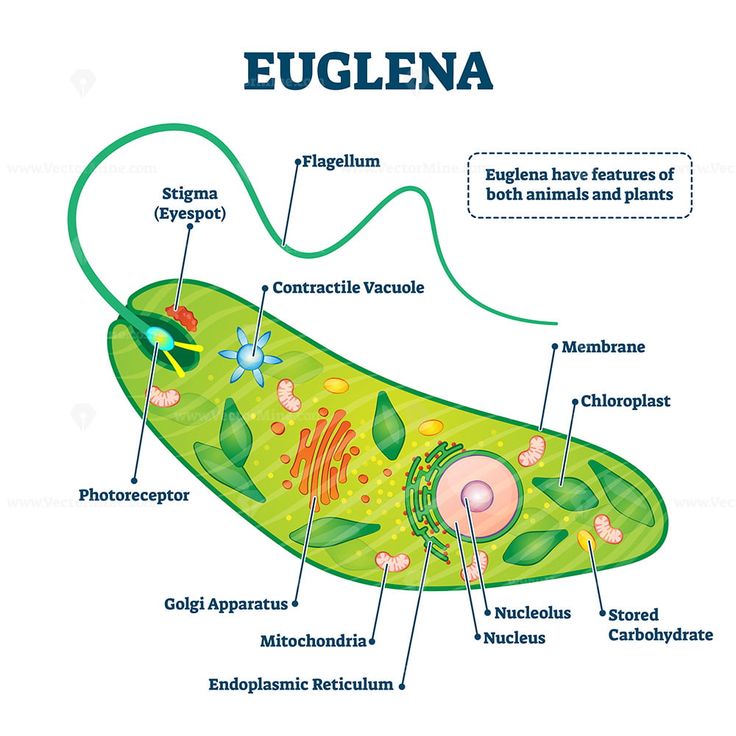
Select an organelle on the left diagram...
Each system in Euglena displays features of both the Plant and Animal kingdoms. Use the active SVG interactive points to learn about specific structures.
Euglena is classified under Kingdom **Protoctista** because it is a unicellular eukaryotic organism displaying a mix of both plant and animal characteristics: like a plant, it contains **chloroplasts** and can photosynthesize, but like an animal, it lacks a **cellulose cell wall** and possesses a **flagellum** to swim actively.
Part 3: Advanced Virology Diagnostics
Structure of a typical virus particle
Click parts of the viral schematic or view the textbook scan to analyze the structure of a Tobacco Mosaic Virus (TMV) particle.
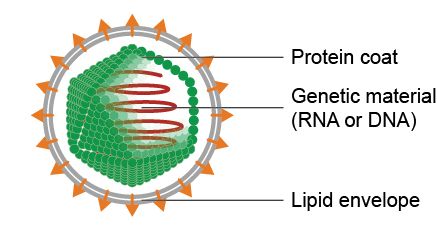
Pathogen Analyzer
Click biological targets in the TMV diagram above to view details of their biochemical architecture.
Is a virus a living organism? Explain your answer.
Core Answer Position: No
Viruses are not considered living organisms because they do not carry out metabolic processes like respiration, they cannot grow or feed, and they are incapable of reproducing without invading and hijacking a host cell's machinery.
Explain the statement "viruses are all parasites".
This statement refers to the fact that viruses are obligate intracellular parasites: they cannot replicate independently and must infect a host cell to produce new virus particles, causing damage, disease, or cell death in the process.
Part 4: Key Biological Glossary Definitions
Invertebrate
An animal that completely lacks a backbone or vertebral column. Invertebrates make up over 95% of all animal species on Earth.
Hyphae
Microscopic, branching, thread-like filaments that grow to form the mycelium network of multicellular fungi, absorbing nutrients and releasing digestive enzymes.
Saprotrophic
A mode of nutrition where an organism obtains nutrients by releasing digestive enzymes onto dead or decaying organic matter externally, then absorbing the digested product.
Comments
Post a Comment